about
The project began with a simple but important challenge: retain the recognisable GLOBAL character of the original board, while resolving the practical issues that were affecting long-term quality. Handles coming loose, tolerance inconsistencies and wood cracking all needed to be addressed without compromising the board’s clean, premium appearance.
We were involved from inception to market, working across concept development, CAD, prototyping, manufacturing refinement and launch asset creation. The design process focused on the details that customers may not immediately notice, but absolutely feel over time — stronger construction, better fit, more reliable production and a product that feels worthy of sitting alongside GLOBAL’s knives.
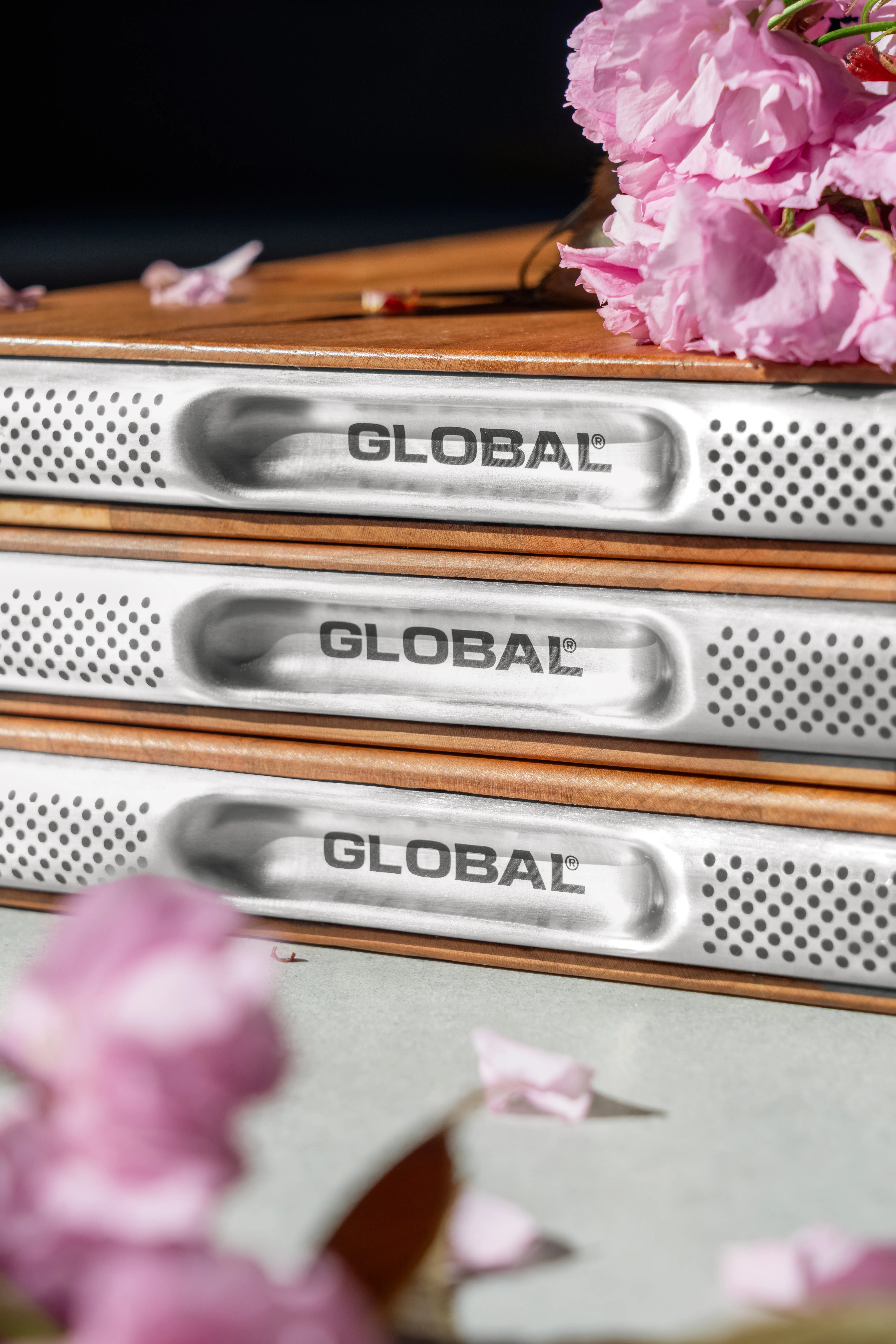
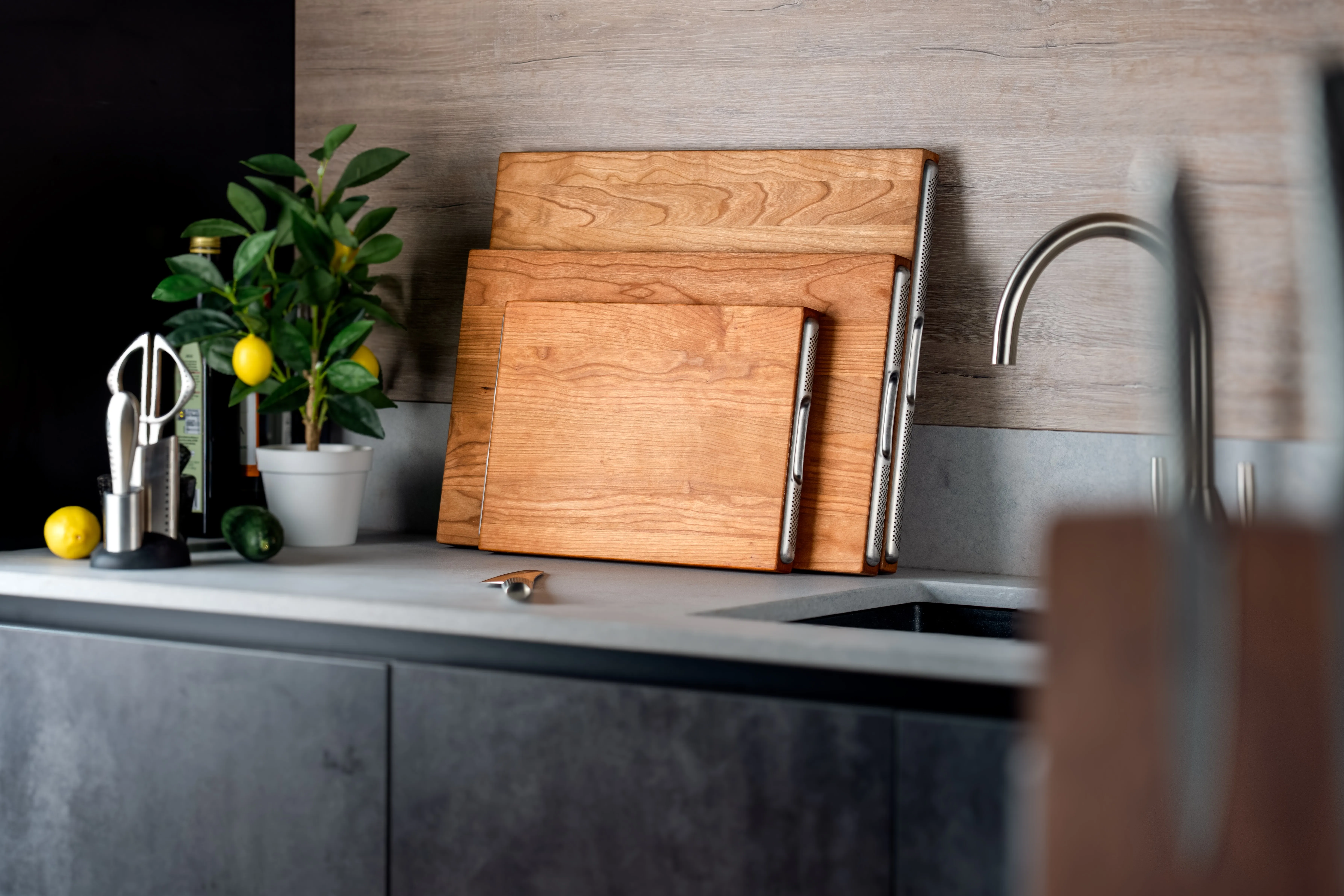
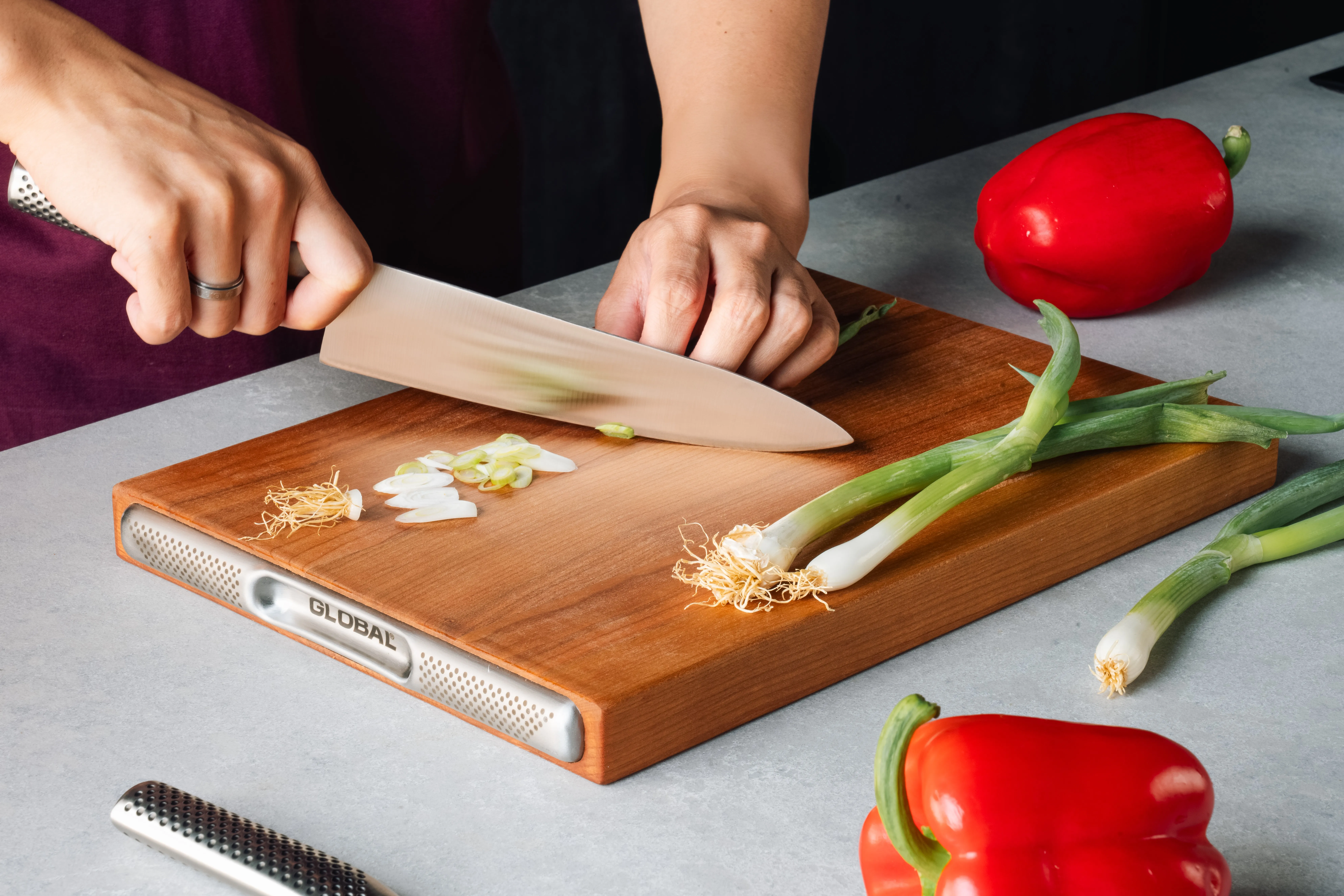
The final board uses cherry wood, chosen for its rich reddish tone, Japanese Sakura association and knife-friendly cutting surface, paired with a stainless steel handle detail that anchors it firmly in GLOBAL’s design language.
The result is a refined, commercially successful redesign that has become one of GLOBAL’s best-selling boards.
credits
Creative Direction, Strategy
Mike Chan
Product Development
Mike Chan
Design for Manufacture
Mike Chan

What needed fixing
The existing board had the right product opportunity, but several details were affecting long-term quality. Handles could become loose, production tolerances were inconsistent, the timber was prone to cracking, and the varnished surface scratched too easily through regular use.
Studio Chan approached the redesign by focusing on the parts customers may not consciously notice at first: fit, finish, thickness, material behaviour and how the product ages over time.
Loose handles
Handle fit needed to be more secure and consistent across production.Tolerance issues
Small inconsistencies in manufacture were affecting the perceived quality of the board.Wood cracking
Material behaviour and construction needed refinement to improve long-term stability.Surface scratching
The varnished finish marked too easily, making the board feel worn before its time.
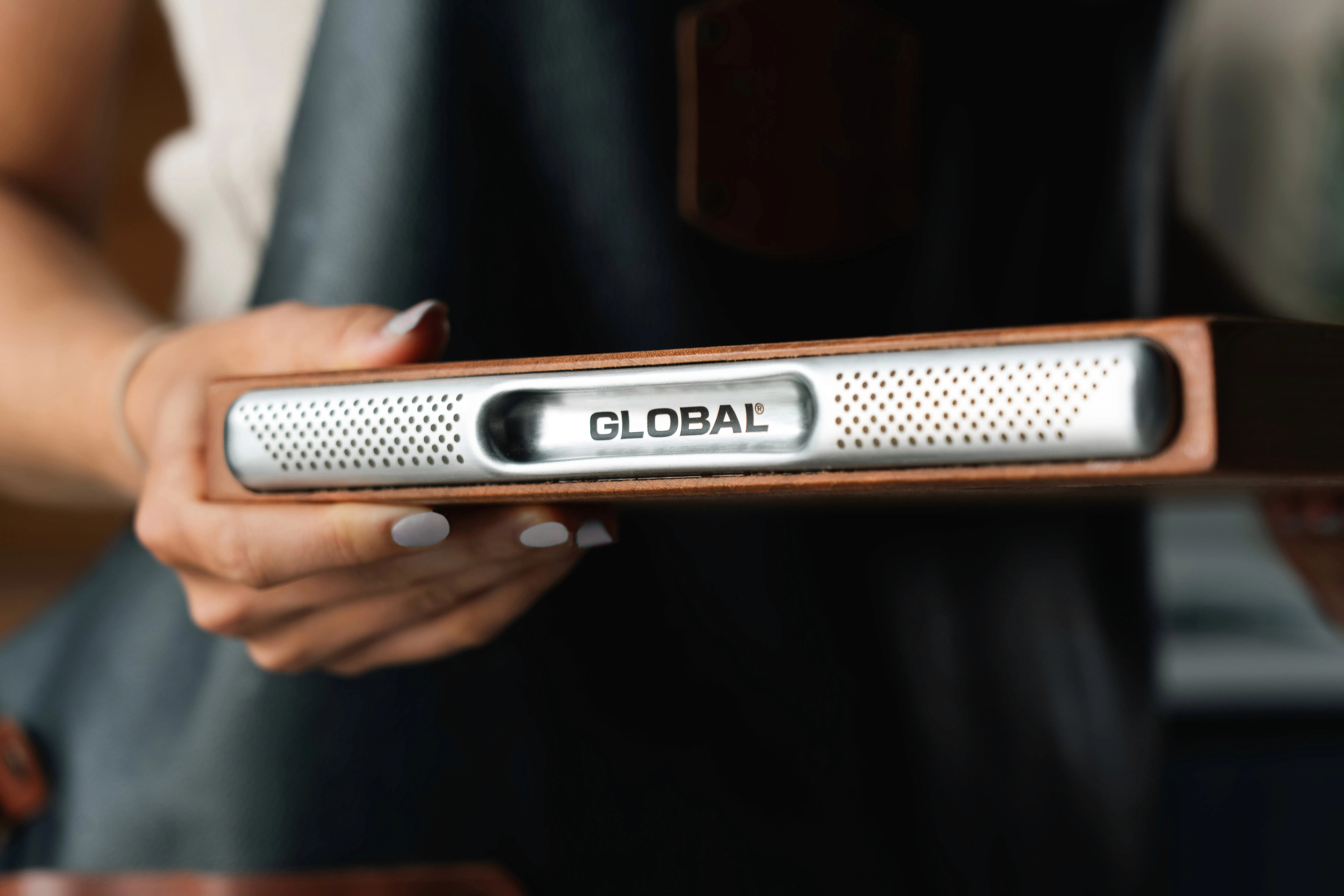
The board was initially explored at 4cm thick to create a heavier, more substantial product. However, supplier feedback indicated that raw cherry wood was not readily available at this thickness, so the board would need to be produced with a two-layer laminated construction.
This would have increased cost, added production complexity and introduced another potential point of failure. The board was therefore refined to 3cm thick, allowing it to be produced from a single layer of wood while still retaining a solid, premium feel.
This decision improved material efficiency, reduced cost and made the final product more suitable for consistent manufacture.
4cm
Two-layer lamination required
Higher cost
More manufacturing complexity
3cm
Single-layer construction
Lower cost
Cleaner production
Still premium in feel